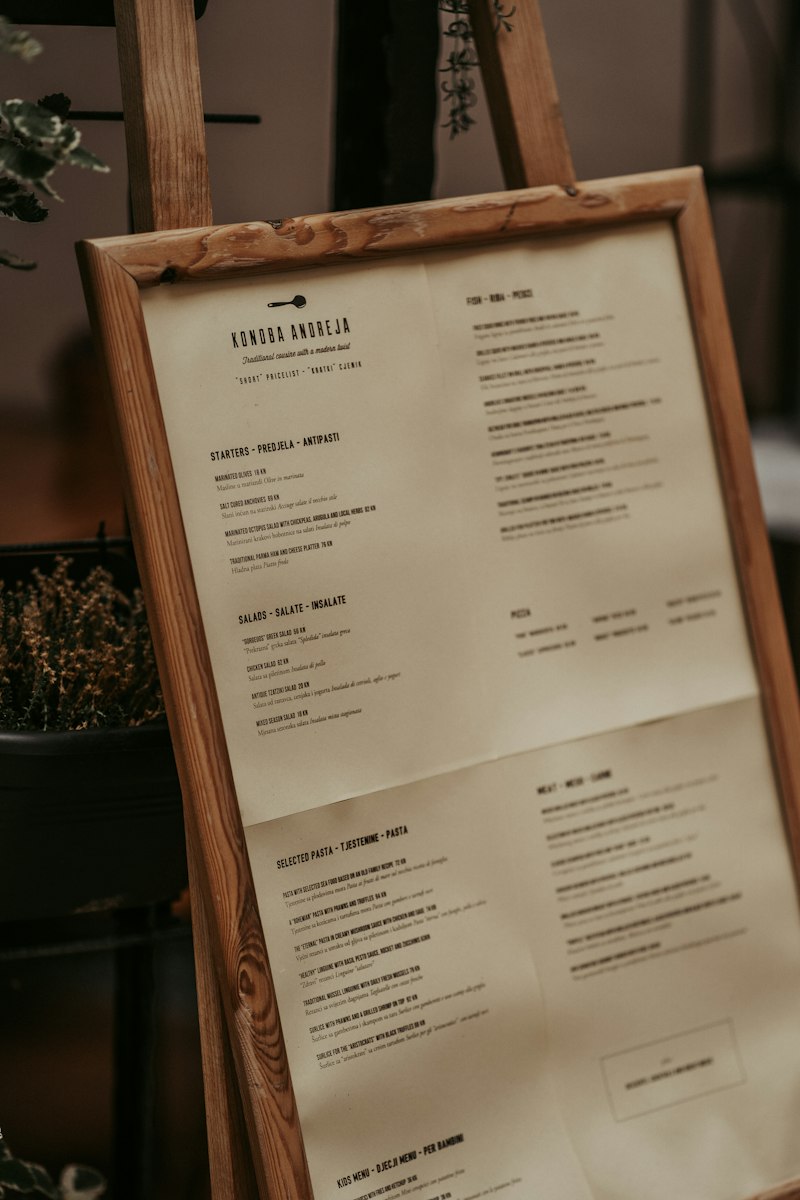
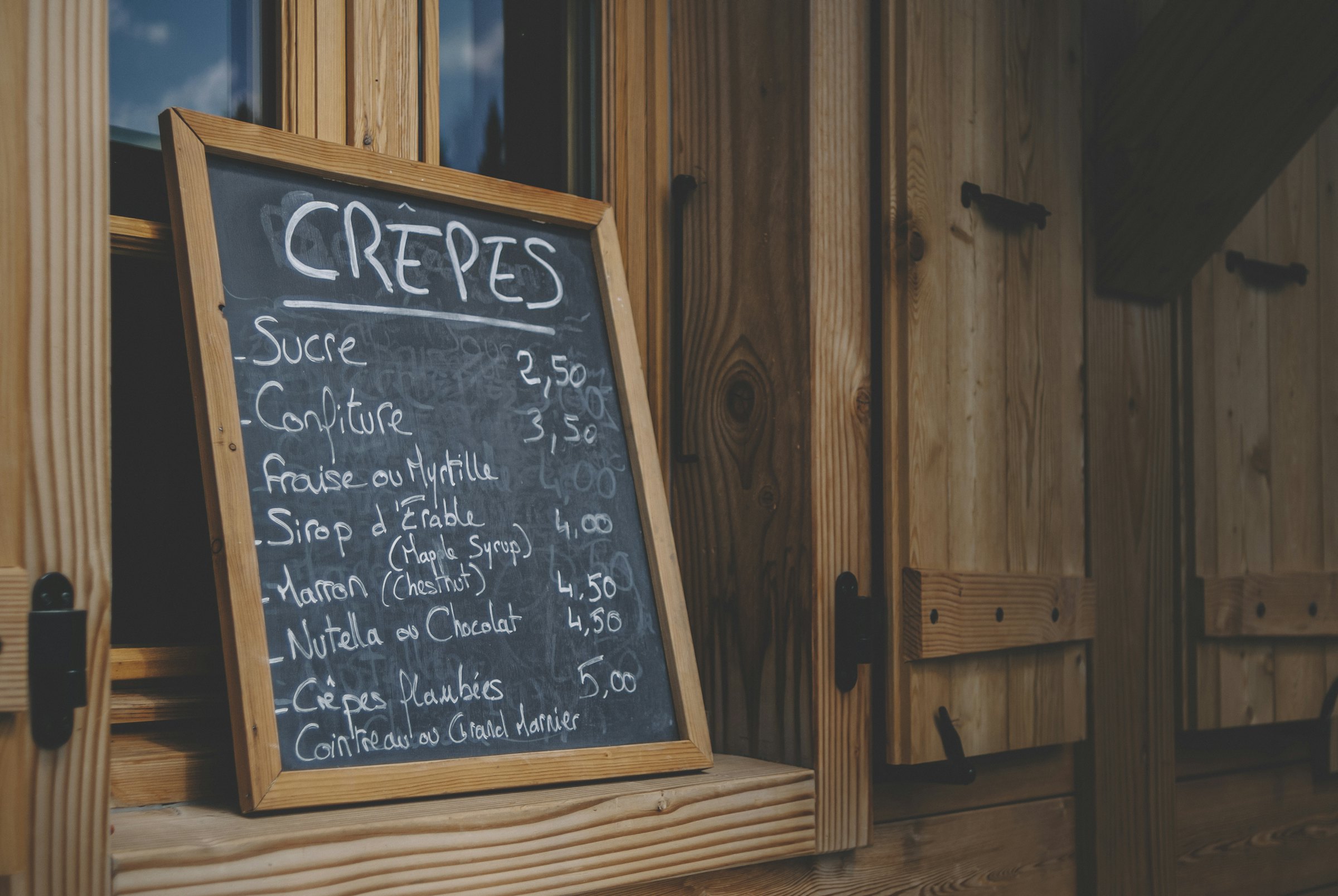
A guest who can’t read the menu orders what they recognise or asks about everything, and that takes up your team’s time. A good translation helps guests decide. The hard part is rarely vocabulary. It’s dishes that don’t exist elsewhere and details that have to be right.
This guide is written from a German point of view, where the examples and law come from. The method works anywhere.
Is it worth translating your menu?
It’s worth it if guests who don’t read the local language come regularly. In Germany, the numbers show this happens in many places:
- Travellers. In July 2026, the Federal Statistical Office counted 10.8 million of 58.4 million overnight stays from guests abroad. That covers accommodation, varies widely by region and says nothing about who comes to you.
- Neighbours. In the 2023 microcensus, about 77% of people in Germany spoke only German at home, 17% spoke German and at least one other language, and 6% spoke no German at home. Many read German without trouble. The figure only shows how mixed a neighbourhood can be.
These numbers don’t prove that more languages bring more sales. They only show how many guests might benefit.
Which languages does your menu need?
English is the first choice for most places, and the rest depends on your guests, not a national average. In Germany’s microcensus, among the 15.6 million people who mainly or only speak another language at home, the most common were Turkish (14%), Russian (12%) and Arabic (9%). Your street may look completely different.
Here’s how to find out. Have your team keep a tally at the till for one week of the languages guests speak or ask in. Also ask your local tourist office about the main countries visitors come from.
| Example (made up) | One week’s tally | Decision |
|---|---|---|
| Café Morgenrot, near the station | English 60, French 12, Spanish 5 | English now, French next |
| Bäckerei Hafenkorn, residential area | Turkish 25, English 10, Arabic 8 | Turkish and English, look into Arabic |
| Restaurant Laterne, old town | English 90, Dutch 30, Italian 20 | English and Dutch, more on the digital menu |
Remember that Arabic and Hebrew read right to left. Check first that your print template or tool shows them properly.
Does the German menu have to stay?
Yes, in Germany the German version stays as the base and the translation comes on top. Section 2 of the German food information ordinance (LMIDV) requires mandatory food information to be in German, and that includes your allergen information. We found no duty to translate in the rules on allergens and prices, as of November 2026. So a translation is your service, and it still has to be right: under Article 7 of the EU food information regulation, food information must not mislead. For the mandatory content, see what must be on a menu in Germany.
What do you translate, and what stays in German?
Keep the name of a typical dish and explain it in one short line, and translate everything general. Guests then order the real dish and still know what’s coming. The table shows examples to adapt to your own recipes:
| On the German menu | Better in English | The trap |
|---|---|---|
| Leberkäse | Leberkäse: Bavarian-style baked meat loaf | Literally “liver cheese”. Germany’s official food guidelines say it usually has no liver in Bavaria |
| Wiener Schnitzel | Wiener Schnitzel: breaded veal cutlet | Always veal under those guidelines |
| Schweineschnitzel Wiener Art | Vienna-style breaded pork schnitzel | Don’t shorten it to “Wiener Schnitzel” |
| Cordon bleu, no animal named | Cordon bleu: veal, ham and cheese | Veal by default under the guidelines. If it’s turkey, say so |
| Maultaschen | Maultaschen: Swabian filled pasta pockets | Name the filling, often meat |
| Spätzle | Spätzle: soft egg noodles | Stays German |
| Flammkuchen | Flammkuchen: thin crispy flatbread with crème fraîche | Not just “pizza” |
| Rote Grütze | Rote Grütze: cooked red berry dessert | “Red groats” means nothing to anyone |
| Apfelschorle | Apple juice with sparkling water | Keep the size, for example 0.3 l |
The schnitzel, cordon bleu and Leberkäse terms come from the guidelines for meat and meat products in the German Food Code (Lebensmittelbuch). A translation must not turn pork into veal. Writing “Wiener Schnitzel (pork)” as a shortcut isn’t a good fix.
AI, a translator or your own team: who should translate?
AI can write the draft, and a native speaker of the target language should check it. Either one alone has weaknesses.
Solid numbers are rare. A 2025 master’s thesis at Kaunas University of Technology looked at 30 typically Lithuanian food terms on five real menus and in three AI translation tools. It found 101 errors in 154 human translations and 135 errors in 118 AI translations, 11 of them completely unrelated. That’s one thesis on one small cuisine, and it shows two things: AI did worse, and people make plenty of errors too.
| Option | Strength | Weakness | Fits |
|---|---|---|---|
| Someone on your team | Knows the dishes | May not write the language flawlessly | Checking a draft |
| AI translation | Fast, many languages, easy to change | Regional dishes, mistakes sound plausible | The draft, rarer languages |
| Professional translator | Clean text, clear responsibility | A new job with every change | The main language of a stable menu |
| AI plus a native speaker | Fast and checked | Needs someone who really reads it | Most places |
Our article on creating a menu with AI covers what else AI reads and words well or badly.
Translate this menu into English for restaurant guests. Keep the names of regional dishes in German and explain them in eight words or fewer. Copy prices and sizes exactly. Add no ingredients. Never change the type of meat. Do not translate the allergen column: leave it empty. Mark anything you are unsure about with CHECK.
How do you handle allergens in other languages?
Never translate allergens freely: take the terms from the official language version of the EU regulation. They’re in Annex II of Regulation (EU) No 1169/2011, which exists in all official EU languages. The English list includes, for example, “Cereals containing gluten”, “Crustaceans”, “Molluscs”, “Lupin” and “Nuts”, where “Nuts” means almonds, hazelnuts, walnuts and others.
- Keep peanuts and nuts apart. They’re separate groups in the annex.
- One dish, one check. When the German entry changes, change all languages the same day.
- Turkish and other non-EU languages. There’s no official EU version. Have a native speaker with kitchen experience check the list once.
- Ask guests with allergies to speak to the team. Say so in every language on the menu.
Our guide to allergens on the menu covers the labelling itself.
How do you show several languages?
Two languages usually sit well together on paper, and a digital menu can offer far more. What matters is that guests choose the language themselves.
| Format | How it works | Limit |
|---|---|---|
| One paper menu, two languages | German on top, English right below in a quieter style | Three or more gets cramped |
| A paper menu per language | Clean to read | All need reprinting with every price |
| Digital menu | A visible language switch, prices from one source | Has to work well on a phone |
For a digital menu, Google recommends a separate address per language version and advises against redirecting visitors automatically by language. Offer visible links instead, so every guest can find their language. And make sure prices and allergens come from one single source, so a change can't be forgotten in one language.
How do you keep the translation right?
A translation stays good when you have a fixed word list and a fixed routine. Keep a simple list: your term, the English version, who checked it. Then “homemade” reads the same everywhere and a new dish is quick to add. After every menu change, do a quick count: same number of dishes, same prices and same sizes in every language.
Can you do this without keeping every language up to date yourself?
With the NFCeez digital menu you only look after your German menu. You photograph it in the NFCeez app or upload a PDF, check dishes, prices and allergens, and publish. You don't pick languages at that point. Guests choose their language at the top of your Smart Page, one of 25: every official EU language plus Turkish. When someone opens the menu in their language, the AI translates it right then. Change a price in German, and the next guest sees it in every language. If you've checked a translation yourself, the menu shows that one first.
The limits: a machine translation can explain a regional dish wrongly, as described above. So have someone who speaks your most important foreign language well read through your most-ordered dishes. The note asking guests with allergies to check with your team belongs on the digital menu too.
Where do you start?
Your next step: starting tomorrow, keep the tally at the till for a week and note the ten dishes guests ask about most. Translate those ten first.
How NFCeez does thisYour menu in German, for guests in their language.You only look after the German menu. Guests choose one of 25 languages on your page, and a translation you've checked yourself comes first.See how it works- Statistisches Bundesamt: Tourismus in Deutschland im Juli 2026
- Statistisches Bundesamt: Sprachen zu Hause, Mikrozensus 2023 (Pressemitteilung, Februar 2025)
- LMIDV, § 2 Sprache
- Neufassung der Leitsätze für Fleisch und Fleischerzeugnisse, BAnz AT 28.07.2022 B1
- Ivaškevičiūtė (2025): Issues of culture specific item translation in traditional Lithuanian restaurant menus, Masterarbeit, Kaunas University of Technology
- Regulation (EU) No 1169/2011, Annex II (English wording, UK legislation site)
- Google Search Central: Managing multi-regional and multilingual sites
- Verordnung (EU) Nr. 1169/2011, Art. 7
- Regulation (EU) No 1169/2011, Art. 7 (English wording, UK legislation site)