A guest with a nut allergy asks, "Is there anything in this?" Your team needs a safe answer, on a packed Saturday and from the new temp too. This guide covers the law in Germany as of November 2026. The EU sets which allergens count. Each country decides how the information reaches guests for unpacked food, so outside Germany, check your national rules.
Do allergens have to be printed on the menu in Germany?
No, allergens don't have to be printed on the menu itself, but guests must be able to find them out before they order. That comes from section 4(3) of the LMIDV, Germany's regulation implementing the EU Food Information Regulation (often called FIC or, in German, LMIV). The duty covers everything you sell unpacked, from the plated main to the cake in the display case (section 4(2)).
The information must be clearly visible and legible, and nothing may hide it. It must also be available in German, as the guide from the Bayreuth chamber of commerce (IHK) points out. Translations are a welcome extra, not a replacement.
Which 14 allergens does the EU require?
The list is in Annex II of Regulation (EU) No 1169/2011 and covers the 14 substances below and products made from them. Small amounts count, and so do allergens that arrive through bought-in products. The table follows a guidance sheet from Lower Saxony's food authority, which also gives the letters A to N as the usual key. The letters are a convention, not part of the law.
| Key | Allergen | Often found in |
|---|---|---|
| A | Cereals containing gluten: wheat, rye, barley, oats, spelt, kamut | Breadcrumbs, sauce thickener, beer |
| B | Crustaceans | Prawns, shrimp meal |
| C | Eggs | Liquid egg, yolk |
| D | Fish | Surimi, caviar |
| E | Peanuts | Peanut butter |
| F | Soy | Soy lecithin, tofu |
| G | Milk, including lactose | Butter, cream, cheese |
| H | Tree nuts: almonds, hazelnuts, walnuts, cashews, pecans, Brazil nuts, pistachios, macadamias | Marzipan, nougat, brittle |
| I | Celery | Stock, spice blends |
| J | Mustard | Dressings, spices |
| K | Sesame seeds | Sesame oil, tahini |
| L | Sulphur dioxide and sulphites above 10 mg/kg or mg/l | Wine, dried fruit |
| M | Lupin | Lupin flour |
| N | Molluscs | Mussels, squid |
For cereals and nuts, name the exact one. "Contains nuts" isn't enough: it has to say "contains walnuts". A few products are exempt. The IHK guide mentions glucose syrup based on wheat or barley as an example. In Germany, the wording usually starts with "enthält" ("contains").
What are your options, and which one fits?
German law gives you five routes, and you can combine them. A small café with changing cakes often does best with a folder plus a notice. A restaurant with a fixed menu usually prints a key.
| Route | Condition | Good for |
|---|---|---|
| Allergens written out beside the dish | Clearly legible | Small, fixed menus |
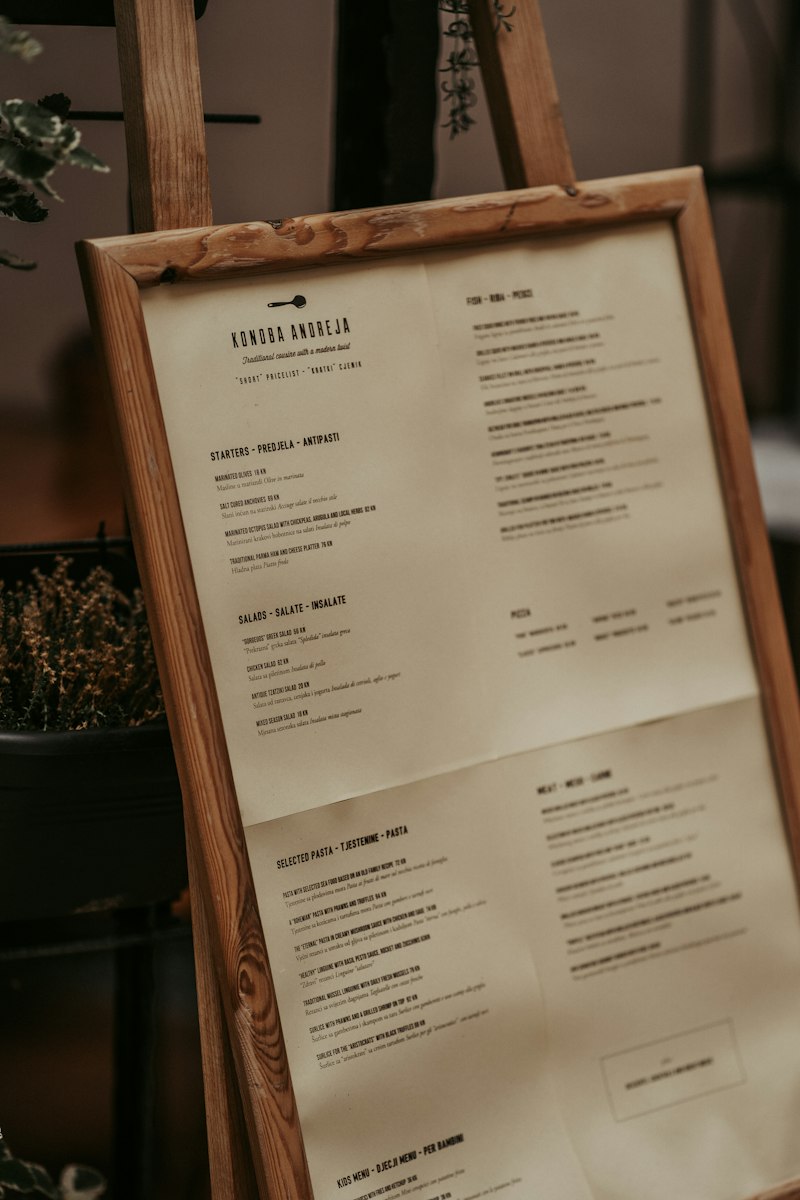
| Footnotes or endnotes with a key | Easy to understand, clearly flagged at the dish (s. 4(3)) | Longer menus |
| Label or notice | At the food or on display in the premises | Display cases, buffets, daily boards |
| Other written or electronic information (folder, digital menu) | Directly and easily accessible, plus a note at the food or on a notice saying how to get it (s. 4(3)) | Changing offers |
| Spoken, by informed staff | Immediately on request before ordering, a written or electronic record exists, and a visible notice says so (s. 4(4)) | Well-trained teams |
Verbal information doesn't save you the paperwork. The record still has to exist, for guests and for inspectors. The IHK Schwerin describes a simple tick-box table as sufficient.
Is a QR code or digital menu enough?
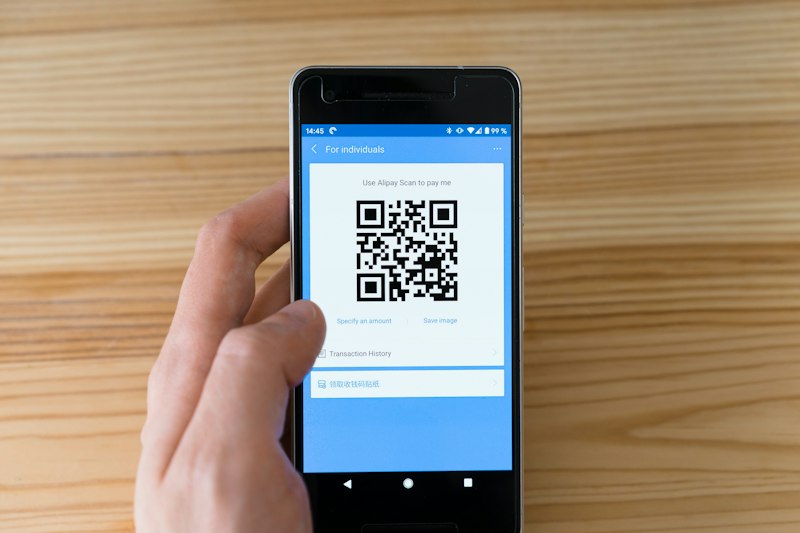
Yes, in Germany a digital menu can be enough if the allergens are directly and easily accessible there, and a note at the food or on a notice tells guests where to find them. That's section 4(3) sentences 2 and 5 of the LMIDV. A link to a ten-page PDF is a poor fit for "easily".
If you use a digital menu, look for three things: the allergens sit on the dish itself, not in a separate file. Guests don't need an app to see them. And you can add a changed recipe yourself the same day, without waiting for anyone.
The regulation doesn't address guests without a phone or with a flat battery, so we suggest keeping a printed folder at the counter as a fallback. To learn how strict your authority is, ask your local food inspectors (Lebensmittelüberwachung). There's more on the practical side in our article on QR code menus.
Additives must use the same route as allergens, under section 5(2) of the LMZDV, Germany's food additives regulation. Our guide on what must be on a menu in Germany lists them.
Do you have to declare "may contain traces"?
No, the EU rules don't require you to declare traces, because traces don't count as an ingredient. The IHK Bayreuth guide says so directly, including for "may contain traces of..." on your supplier's label.
The law is clear, but with an allergic guest it isn't the whole answer. If your kitchen also chops nuts, say so. Never promise "allergen-free" unless you can truly deliver it. "We also work with nuts in this kitchen" is the better sentence.
How to build your allergen list in one afternoon
- List everything. Every dish, sauce and cake, plus drinks such as beer and wine.
- Break down the recipes. Include stock, spice blends and dressings.
- Check the labels. Bought-in products count just like food you make. If a detail is missing, ask your supplier for the product sheet.
- Build a grid. Dishes in rows, allergens in columns, tick the boxes and add the date.
- Pick your route. Menu, notice, folder or digital, with the matching note.
- Brief the team. Staff who answer verbally must be properly informed about the ingredients (section 4(4)). Agree who checks with the kitchen when in doubt.
- Assign the updates. New supplier, new recipe, new special: one named person updates the list that same day.
Here's a finished example with made-up recipes from Café Morgenrot:
| Dish | On the menu | In full |
|---|---|---|
| Croissant | A1, C, G | contains wheat, eggs, milk |
| Carrot cake | A1, C, G, H2 | contains wheat, eggs, milk, hazelnuts |
| Lentil soup | I, J | contains celery, mustard |
| House white wine | L | contains sulphites |
What are the most common mistakes?
- Blanket statements. "Our dishes may contain allergens" doesn't count, because the information has to be tied to the dish. Sensible groups are fine, such as "all breaded dishes contain wheat flour, egg and milk".
- Forgetting the specials. The chalkboard needs the same information, or a note pointing to the folder.
- Missing bought-in products. Celery in stock and soy in chocolate are the classics.
- Out-of-date lists. The supplier changes a recipe and your folder doesn't.
- Repeating the obvious. If the name already says it, as with cream of celery soup, you needn't repeat that allergen. You still list any others in the dish.
What happens if the information is missing or wrong?
In Germany, selling unpacked food without the required information is an administrative offence with a fine of up to 50,000 euros. That follows from section 6(4) of the LMIDV and section 60(2) no. 26 and 60(5) no. 2 of the German Food and Feed Code (LFGB). That's the ceiling, and the authority sets the amount in each case. A guest in hospital because of a wrong answer is the far bigger worry.
Your local Lebensmittelüberwachung answers questions on how to do this, and many offices publish their own guidance sheets. Your IHK can help too.
How do the allergens get into a digital menu without typing it all out?
In the NFCeez app you take photos of your menu or upload a PDF, up to 20 pages. You answer three yes or no questions, and the AI turns the lines into dishes with prices and categories. If you want, it suggests allergens for each dish from the ingredients, plus vegan and vegetarian.
Before you publish, you see which details came from the AI and confirm them, ideally with your grid next to you. Anything the AI can't place doesn't go on the menu as a guess: guests see a note to ask your staff instead. After that, the allergens sit right on the dish. Guests open the menu from an NFC sticker or QR code, with no app, and read it in their own language. When a recipe changes, the new detail is on the menu as soon as you publish.
The limit: NFCeez doesn't replace your grid. Only your kitchen knows about the bought-in stock and the nuts on the next board. You still need the note pointing to the digital menu, and the folder at the counter. The digital menu page shows the steps in the app.
Your next step
Take your ten best-selling dishes today and fill in the grid for them. Do the rest tomorrow. You need the finished grid whatever you use: for the folder, for inspectors and, if your menu runs digitally, to check everything the AI suggests against it. Accuracy stays with you, because only your kitchen knows what's really in the pot.
How NFCeez does thisYour allergens, confirmed by you.The AI suggests allergens from your ingredients. You confirm them before you publish, and guests read them right on the dish, in their own language.See how it works- § 4 LMIDV (Lebensmittelinformations-Durchführungsverordnung)
- § 6 LMIDV (Ordnungswidrigkeiten)
- § 5 LMZDV (Lebensmittelzusatzstoff-Durchführungsverordnung)
- § 60 LFGB (Bußgeldvorschriften)
- Verordnung (EU) Nr. 1169/2011, Anhang II
- Merkblatt Kennzeichnung in Gastronomie und Gemeinschaftsverpflegung, LAVES Niedersachsen (2022)
- Merkblatt Kennzeichnung von Lebensmitteln im Gastgewerbe, IHK Bayreuth (2017)
- Kennzeichnung von allergenen Stoffen in der Gastronomie, IHK Schwerin