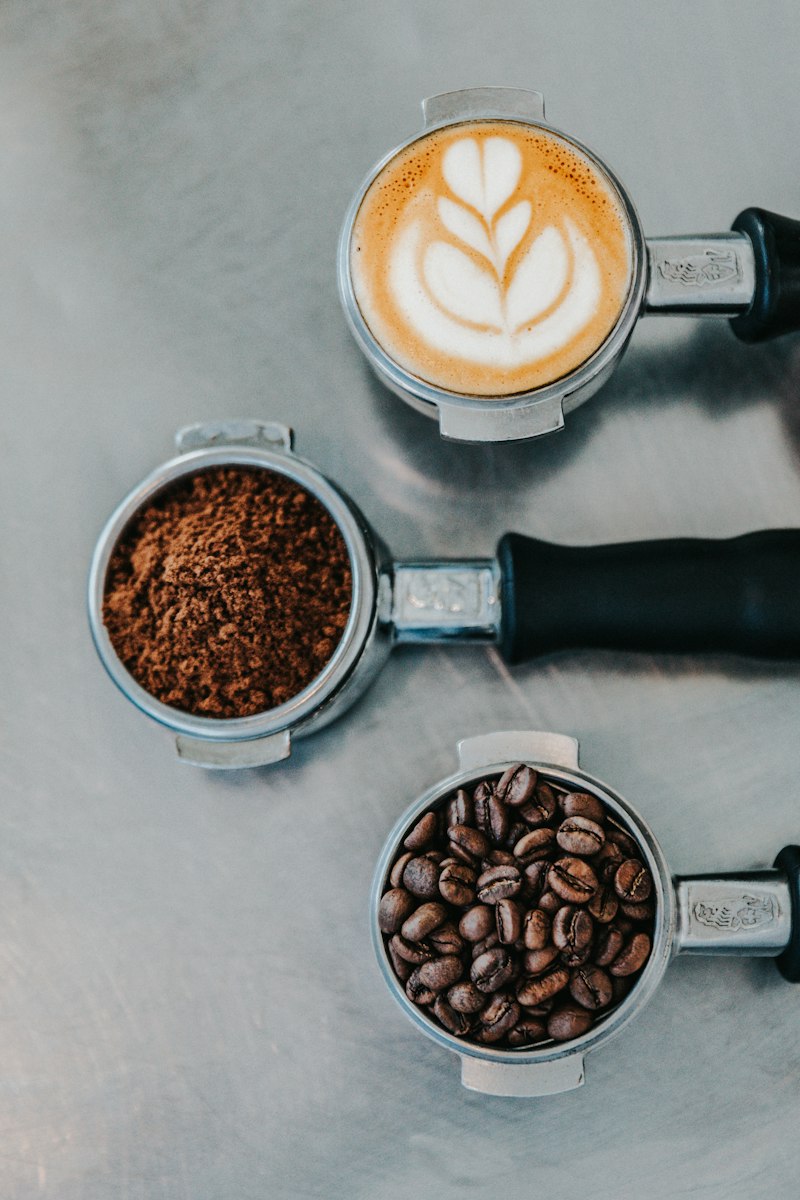

Every place knows them: the woman who collects her flat white at half past seven each morning, the friends at the same table every Friday. This guide covers how to get more of them, what the research actually supports, and what you can do differently tomorrow.
Why do regulars matter so much right now?
Regulars matter because German hospitality revenue is currently growing through higher prices, not more trade. According to Germany’s Federal Statistical Office, restaurant and café revenue in the first half of 2026 was 5.7% below the year before after adjusting for prices, and 2.2% above it before adjusting (preliminary figures). In that climate, a guest you see a few more times a year is trade you paid no advertising for.
Be careful with two famous numbers. Harvard Business Review wrote in 2014 that a new customer costs five to 25 times more than keeping an existing one, depending on the study and the industry, and that 5% more retention means 25% to 95% more profit. Those figures come from general management writing, not from cafés or restaurants. Marketing researcher Byron Sharp even calls the 5% claim misleading, because it rests on a thought experiment. Use your own numbers instead: what is a regular worth?
When does a guest count as a regular?
There is no standard definition, so pick your own. For a café that might be twice in 30 days. For a restaurant where people come monthly, twice in 90 days fits better. What matters is that your team has the same number in mind and you count it the same way every month.
It helps to think in three stages, because each one fails for a different reason.
| Stage | What usually goes wrong | What you can do |
|---|---|---|
| First visit | The guest leaves with no link to you at all. | Offer a stamp card, or mention the next thing worth coming back for. |
| Second visit | Nobody notices they came back. | “Good to see you again.” That’s enough. |
| Routine | The thread breaks after a reward, or the specials get boring. | Mention the next round, and offer something new to try now and then. |
What gets a guest to come back a second time?
A small, specific reason usually does it, rather than a big promise. These five levers cost little and work in any kind of place.
- Recognition. A first name and the usual order are the cheapest thing you have. New staff learn faces fastest when experienced colleagues introduce them in passing.
- A reason at the door. Don’t stop at goodbye, give a reason: “The plum cake is back on Thursday.” It has to be true, and it can be small.
- Visible progress. A stamp card turns a one-off visit into the first step towards something. The guide to the digital stamp card shows how to build one.
- A small surprise. A taste of the new dish or an espresso on the house. This is everyday experience, not a study, but it costs little and you see the reaction straight away.
- An easy way back. Opening hours that are right on your Google Business Profile, a menu people can read beforehand, a table they can request without phoning.
- On a second visit: “You were in last week, weren’t you? Cappuccino again?”
- When paying: “Do you have our stamp card yet? Your first stamp goes straight on.”
- After a reward: “That one’s on us. The next round starts today.”
- At a quiet table: “This one is new, would you like to try it?”
What does the research on stamp cards really show?
The best-supported finding is that people come more often as a reward gets closer. Kivetz, Urminsky and Zheng studied the ten-stamp card of a campus café at Columbia University in 2006: 949 redeemed cards and about 10,000 purchases. From the first stamp to the last, the gap between purchases shrank by 0.7 days on average, or 20%. The authors estimate this at about two extra coffees a month. That café had little competition on campus, so your results may differ.
A head start also helps. In the same paper, 108 café customers were randomly given either a ten-stamp card or a twelve-stamp card with two free stamps. Both needed ten purchases, and the head-start group finished in 12.7 days on average instead of 15.6. Nunes and Drèze found something similar in 2006, but at a car wash, not a café: redemption is reported at 34% with the head start against 19% without, with eight washes needed either way.
The most useful finding for you sits further back in the Kivetz paper. Activity drops right after a reward, and that is exactly when customers are most likely to leave. The authors advise reaching out straight after the reward. So say out loud that the next round has begun, rather than just sliding the free coffee across the counter.
One more observation from that café: programme members chatted with staff more often (26% against 7%) and left a tip more often (21% against 3%). The authors themselves warn against reading too much into this, since friendlier customers may simply be more likely to sign up.
Should you use discounts?
Discounts work as a targeted occasion, less well as a permanent state. A discount for everyone also pays people who would have come anyway. A reward on a card only costs you when someone actually returns. Planning a loyalty programme works out what that means in euros.
Your quietest day can be livened up differently: double stamps on that day only, or a dish you serve only then. There are more ideas under how to fill quiet days.
What should you never do in the name of loyalty?
Never reward reviews, not even with stamps. Google prohibits incentives such as discounts or free goods for reviews, and removes the content. You may ask every guest for a review. Asking only the happy ones is against the policy.
Notes on guests don’t belong on loose lists with allergies, health details or complaints. In Germany and the EU, data protection rules also apply to email addresses and marketing.
What does a 30-day plan look like?
One month is enough to build this into your routine if you take on one thing a week.
- Week 1, count: for five normal days, your team makes one tally mark per visit at the counter, split into “we know them” and “new”. No names, just marks.
- Week 2, card: set one clear reward, match the number of stamps to how often people visit, and practise the line at the till.
- Week 3, the way back: check hours, menu and booking on Google and Instagram. Agree on one line for saying goodbye.
- Week 4, quiet day: test one reason to come on your weakest day. At the end of the month, count for five days again and compare.
Then compare without wishful thinking. If the share of familiar faces doesn’t rise, the reward is often too far away, or nobody mentions the card at the till. A week of bad weather or a street festival can also shift the count, so run two rounds before you change anything big.
How does this plan work with a digital card, and how can you tell if it’s working?
With the NFCeez stamp card it goes like this. In the app you design the card and set up to three rewards, each at its own stamp count. Guests find it on your Smart Page, confirm their email with a code and add the card to Apple Wallet or Google Wallet. When they pay, your team scans the card and confirms the stamp. After the last reward the card starts again, so the next round is already running. For week 4 you set double stamps as a Boost on your quietest day. The statistics show your members’ return rate and who is one stamp away. NFCeez counts someone as a regular if they came on two different days within 30 days, counted from Wallet stamps and bookings. That’s our own definition, not an industry standard.
The limits: you only see guests who have a card. No app does the recognising or the line at goodbye for you. You can do it without an app too, just more slowly: tally marks, counting paper cards, asking your team.
What do you do today?
Your next step for today: put a sheet of paper next to the till and make tally marks for five days from tomorrow.
How NFCeez does thisThe next round starts right after the reward.After the last reward the card starts again, in your guests’ Wallet. The app shows you who comes back and who is just one stamp away.See how it works- Statistisches Bundesamt: Pressemitteilung Nr. 299 vom 20. August 2026, Gastgewerbeumsatz
- Kivetz, R., Urminsky, O. & Zheng, Y. (2006): The Goal-Gradient Hypothesis Resurrected. Journal of Marketing Research 43(1)
- Nunes, J. C. & Drèze, X. (2006): The Endowed Progress Effect. Journal of Consumer Research 32(4)
- Gallo, A. (2014): The Value of Keeping the Right Customers. Harvard Business Review
- Sharp, B.: Loyalty Myths. Ehrenberg-Bass Institute
- Google Maps: User-contributed content policy (Fake engagement)